

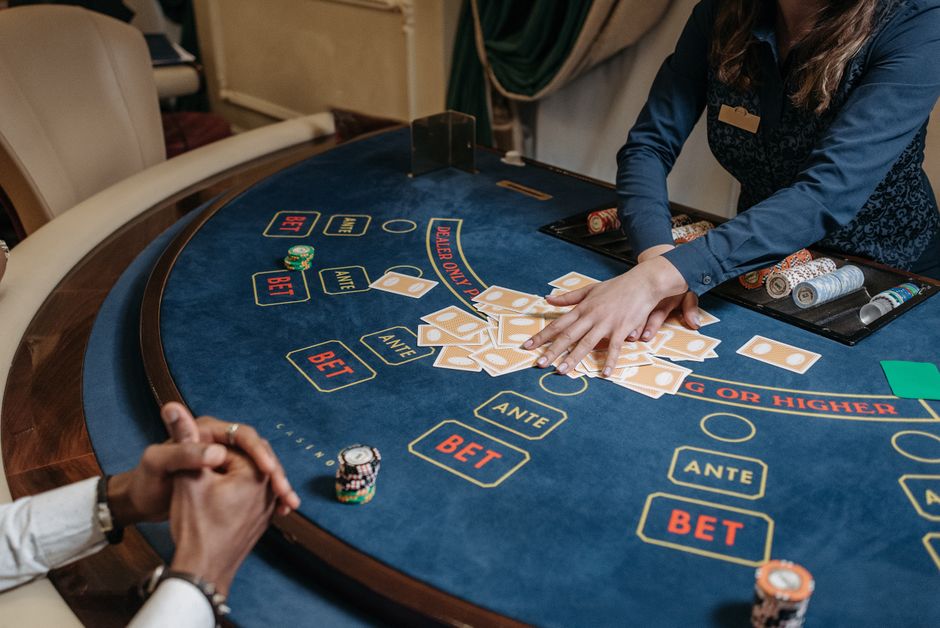
Every gambler has heard the phrase "the house always wins." It's true in a mathematical sense, and yet millions of people still log into casinos, sign up for poker tournaments, and spin slot reels every single day. Why? Because bettors aren't playing against the house in the way they think. They're playing against variance, against each other, and against their own discipline. The house edge is only the background noise. The real game is understanding it well enough to decide whether you're getting value or just entertainment.
That distinction matters more than ever in 2024, when online casinos and sportsbooks are louder, faster, and more aggressively designed than the casinos of the 1990s could ever have imagined. If you're going to put real money on the line, you should understand what's actually happening under the hood.
The House Edge Is Not a Wall, It's a Slope
A common mistake is treating house edge as if it were a fixed fee you pay per session. It isn't. It's a slow tilt in the odds that plays out over thousands of decisions. Consider the difference between blackjack basic strategy, which might carry a house edge of 0.5% in a good game, and a typical casino slot, which can sit between 2% and 10% depending on the machine. Over a single evening, the two feel almost identical. Over a year of play, they're a completely different sport.
Concrete example: put $1,000 through a 0.5% edge blackjack game and your expected loss is about $5. Put the same $1,000 through a 6% house-edge slot and the expected loss climbs to $60. Same bankroll, more than ten times the bleed. This is why sharp players obsess over the game they choose before they ever think about bet sizing.
- Slots: Convenient, private, fast, but usually the worst edge on the floor. Look for RTP (return to player) above 96% and low volatility if you want longer sessions.
- Blackjack: Best odds if you actually learn basic strategy. Guessing at the table turns a 0.5% edge into a 2% edge instantly.
- Baccarat: Banker bet sits around 1.06% edge. The tie bet is a tourist trap at roughly 14%.
- Roulette: European single-zero is 2.7%. American double-zero is 5.26%. Same look, double the pain.
Slots Have Gotten Better, and Weirder
The modern slot is a piece of software with a published RTP and a volatility profile, not a random box in the corner of a bar. That's actually good news for players who read the fine print. Pragmatic Play's Sweet Bonanza, for instance, runs around 96.5% RTP in its standard configuration and leans into high volatility, meaning long dry spells punctuated by massive clusters. In contrast, NetEnt's Starburst sits near 96% RTP with low volatility and frequent small wins.
Neither is "better." They solve different problems. If you want an hour of entertainment on a $100 bankroll, low volatility is your friend. If you're chasing a jackpot and can stomach 200 dead spins, you want the high-variance grind. The trap is buying into a game's theme without checking its stats. A licensed casino publishes RTP, volatility, and max win right there on the info screen. Ignoring that page is like buying a used car without looking at the odometer.
One more slot trend worth flagging: bonus buy features. Paying 100x your bet to trigger free spins is not a shortcut to profit. It's a shortcut to variance. On a 96% RTP slot, that bonus buy is still worth roughly 96% of what you paid, which means it's neither smart nor stupid. It's just fast.
Poker Is the Only Seat Where You Can Have the Edge
Here's the thing about poker that separates it from every other game on this list: your edge doesn't come from the house, it comes from the other players. The rake is the tax, and your job is to beat it. In soft cash games at stakes like $0.50/$1, a solid player can realistically win 5 to 10 big blinds per 100 hands after rake. In tougher fields at higher stakes, that same win rate might collapse to 1 to 2bb/100 or even go negative. It is also worth checking keonhacaii5.com.co before deciding.
This means game selection is more valuable than any advanced strategy concept. Sitting in the softest seat in the room beats playing GTO in a shark tank every single time. If you're grinding online, track your win rate over at least 20,000 hands before deciding a stake is beatable. Fifty hands is noise. Two hundred hands is a mood. Twenty thousand is a signal.
What separates break-even players from winners
- They fold more marginal hands preflop than they want to.
- They size bets by what the story requires, not by what feels scary.
- They stop playing when they're tilted, not when they're ahead.
- They take notes on opponents and actually review them.
Sports Betting: The Line Is the Sharpest Game in Town
Sportsbooks aren't casinos with a ball. They're markets, and their edges are razor-thin. A typical NFL spread on a major market carries about 4.5% to 5% vig, which means you need to hit roughly 52.4% of bets just to break even. That's a brutal benchmark. Only a small fraction of recreational bettors can clear it, and most of them are line shoppers who only fire when they find a mispriced number.
If you're going to bet sports casually, treat it as entertainment with a tiny side of skill. If you're going to take it seriously, learn the difference between a closing line and an opening line, embrace the concept of closing line value (CLV) as your main KPI, and bet as rarely as a sniper shoots. Volume without edge is just a donation schedule.
The Tools That Actually Help
You don't need a $500 subscription to a "guaranteed system." You need a spreadsheet and basic self-control. Here's what real players track:
- Bankroll in units, not dollars, so you stop betting emotionally.
- Session length and results, to spot tilt patterns.
- RTP and volatility for each slot you play regularly.
- CLV on every sports bet, because it's the single best predictor of long-term profit.
- Your win rate by game type, so you stop pretending you're a slot grinder when you're actually a poker player.
Nothing on that list costs money. All of it separates people who enjoy iGaming for years from people who rage-quit after a bad weekend.
Responsible Doesn't Mean Boring
The most underrated skill in gambling is walking away. Not just after a big win, but after a loss that's larger than you planned. Set limits before you open the app, not after the third bonus round has eaten your profit. Most licensed operators now have deposit limits, session timers, cool-off periods, and self-exclusion tools built in. Use them. A casino account with a $200 weekly deposit cap is not a punishment. It's a seatbelt.
The honest truth about iGaming is that no strategy turns a negative-expectation game into a positive-expectation one. Slots are entertainment. Roulette is entertainment. Sports betting is a market where a tiny minority can grind out a thin edge. Poker is the only seat where a dedicated, disciplined player has a legitimate path to profit against other humans. Everything else is the cost of a good time, and that's fine as long as you call it what it is.
So yes, the house always wins in the aggregate. But you don't have to be the aggregate. Know your edge, pick your spots, keep your records honest, and never bet money that you'd be upset to lose on a Tuesday night. That's not a party trick. That's the actual game.


Comments